
Pressurized Oxygen Therapy with Individualized Screening
Top-Rated Hyperbaric Oxygen Therapy in
Kootenai County
Oxygen is essential to every cell, tissue, and system in the body. Hyperbaric Oxygen Therapy, commonly called HBOT, creates a pressurized, oxygen-rich environment designed to increase the amount of oxygen available throughout the body.
Give Your Body More Oxygen to Work With
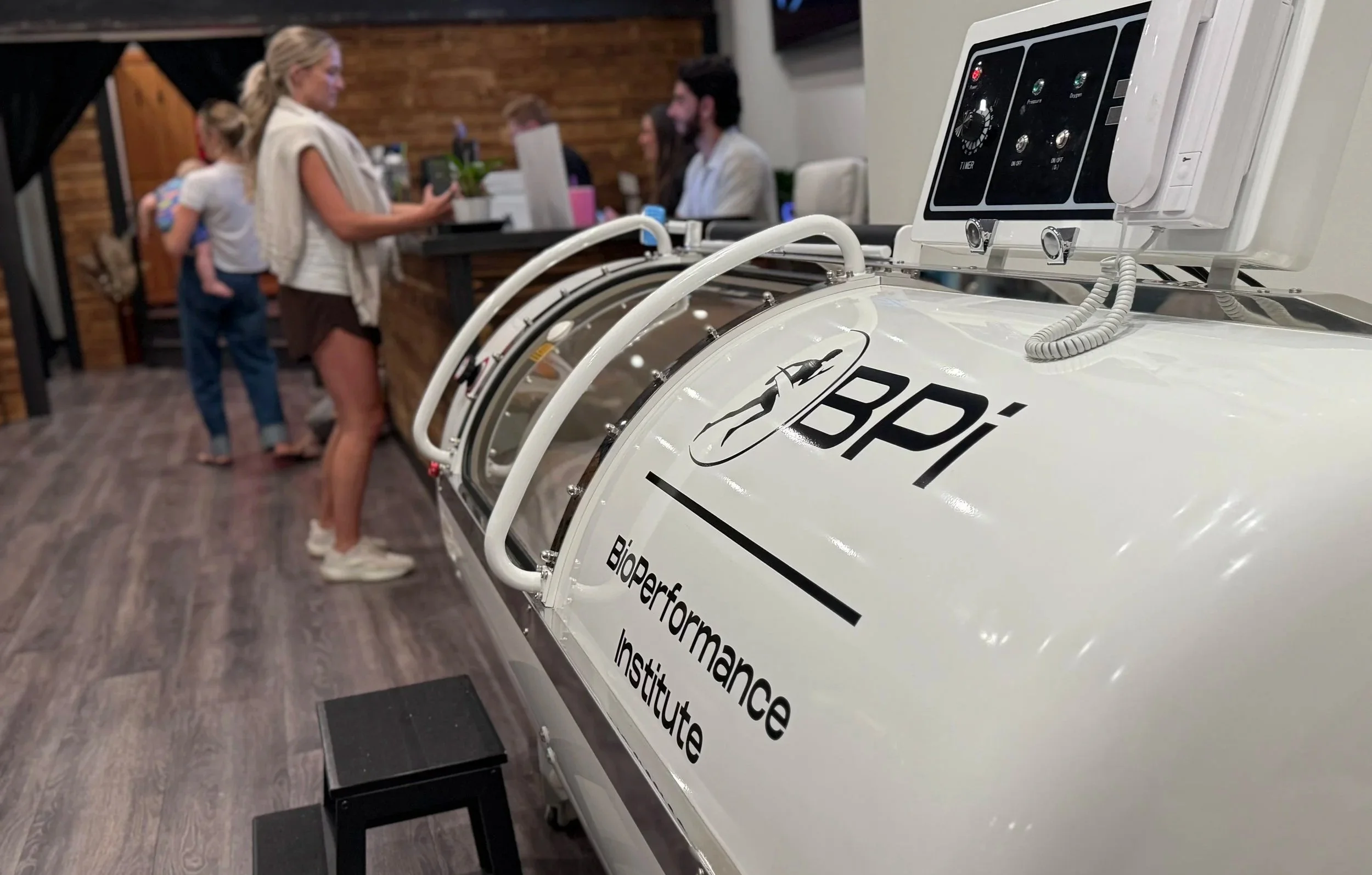
The air we normally breathe contains approximately 21% oxygen. During an HBOT session at BPi, you breathe concentrated oxygen while resting inside a chamber pressurized above normal atmospheric pressure.
The combination of pressure and concentrated oxygen allows more oxygen to dissolve into the blood plasma rather than relying only on red blood cells for transportation. This creates an opportunity for oxygen to reach tissues and areas of the body affected by inflammation, injury, reduced circulation, physical stress, or increased healing demands.
Greater oxygen availability can help create an internal environment that supports:
Cellular energy production
Tissue repair
Healthy circulation
Collagen production
New blood-vessel development
Immune-system activity
The body’s natural inflammatory response
Recovery following physical exertion
Healing following injury or surgery
Long-term physical resilience
HBOT is not simply about breathing more oxygen. Pressure changes how oxygen is transported and made available throughout the body, making hyperbaric therapy a unique tool for recovery, healing, and human performance.
How Hyperbaric Oxygen Therapy Can Help
-
Surgery places significant demands on the body. Healthy tissue oxygenation is an important part of the body’s ability to repair incisions, manage swelling, support immune activity, and rebuild affected tissue.
Before surgery, HBOT may be incorporated into a preparation plan designed to support tissue oxygenation and create a stronger environment for recovery.
After surgery, increased oxygen availability may support wound healing, collagen production, circulation, swelling management, and the development of new blood vessels in healing tissue.
BPi works with each client to determine an appropriate schedule based on the procedure, timing, health history, and recommendations provided by the surgical team.
-
The brain and nervous system require a consistent supply of oxygen. HBOT is being explored for its ability to increase oxygen availability, support neurological function, influence inflammatory pathways, and promote cellular repair.
People living with neurological or autoimmune concerns may explore HBOT as part of a broader support plan. Areas of interest include traumatic brain injury, stroke recovery, multiple sclerosis, cerebral palsy, autism, chronic fatigue, rheumatoid arthritis, and other conditions involving neurological or inflammatory stress.
The appropriate response can vary by condition and person. HBOT is designed to complement appropriate medical care, rehabilitation, medication, and specialist guidance.
-
Inflammation is part of the body’s natural response to injury, illness, physical exertion, and cellular stress. When that response becomes prolonged or excessive, it can affect comfort, mobility, recovery, and overall function.
Hyperbaric oxygen can support oxygen delivery to tissues affected by inflammation and impaired circulation. It may also influence inflammatory signaling, microcirculation, antioxidant activity, and the body’s natural recovery process.
BPi uses HBOT as one available tool for people seeking to support recovery from physical stress, persistent inflammation, injury, surgery, or demanding activity.
-
The body relies on the liver, kidneys, lymphatic system, circulatory system, lungs, and other biological processes to manage waste products and environmental stress.
HBOT increases oxygen availability throughout the body, supporting cellular energy production and circulation. This can make it a valuable addition to a broader recovery plan focused on physical restoration and cellular support.
Some people explore HBOT during recovery from substantial physical stress, demanding medical treatment, or lifestyle changes. When another medical condition or treatment is involved, BPi encourages coordination with the appropriate healthcare provider.
-
Healthy aging depends on the body’s ability to maintain circulation, produce cellular energy, recover from stress, repair tissue, and preserve physical and cognitive function.
Hyperbaric oxygen has become an area of growing interest within longevity and regenerative-health research. Researchers continue to study how repeated hyperbaric exposure may influence cellular aging, mitochondrial function, blood-vessel development, stem-cell activity, inflammation, cognition, and tissue repair.
At BPi, HBOT can be incorporated into a proactive wellness plan designed to support long-term resilience, recovery, and physical capacity.
-
Damaged tissue requires oxygen to repair itself. When circulation is limited or tissue has been significantly affected by injury, infection, radiation, or a chronic health condition, the normal healing process can become more difficult.
HBOT increases the amount of oxygen available to oxygen-deprived tissue. This can support collagen production, new blood-vessel formation, immune-cell activity, and other processes involved in healing.
Hyperbaric oxygen has recognized applications within comprehensive medical care for selected chronic wounds, diabetic lower-extremity wounds, radiation-related tissue injury, compromised skin grafts or flaps, chronic refractory bone infections, and certain severe infections.
HBOT works alongside appropriate wound care, medical treatment, nutrition, glucose management, antibiotics, surgery, or rehabilitation rather than replacing those services.
-
Training and competition place repeated stress on muscles, connective tissue, joints, and the nervous system. The ability to recover between demanding activities can influence performance, consistency, and long-term durability.
Athletes use HBOT to increase oxygen availability during periods of intense training and recovery. The oxygen-rich environment may support tissue repair, the body’s inflammatory response, cellular energy production, and recovery between workouts or competitions.
HBOT can be incorporated into a larger performance strategy that includes sleep, nutrition, mobility, physical therapy, strength training, and appropriate load management.
Competitive athletes, active adults, and people returning from injuries can use BPi’s recovery team to build a more complete approach to restoring and maintaining physical capacity.
Highlights of BPi Hyperbaric Oxygen Therapy
-
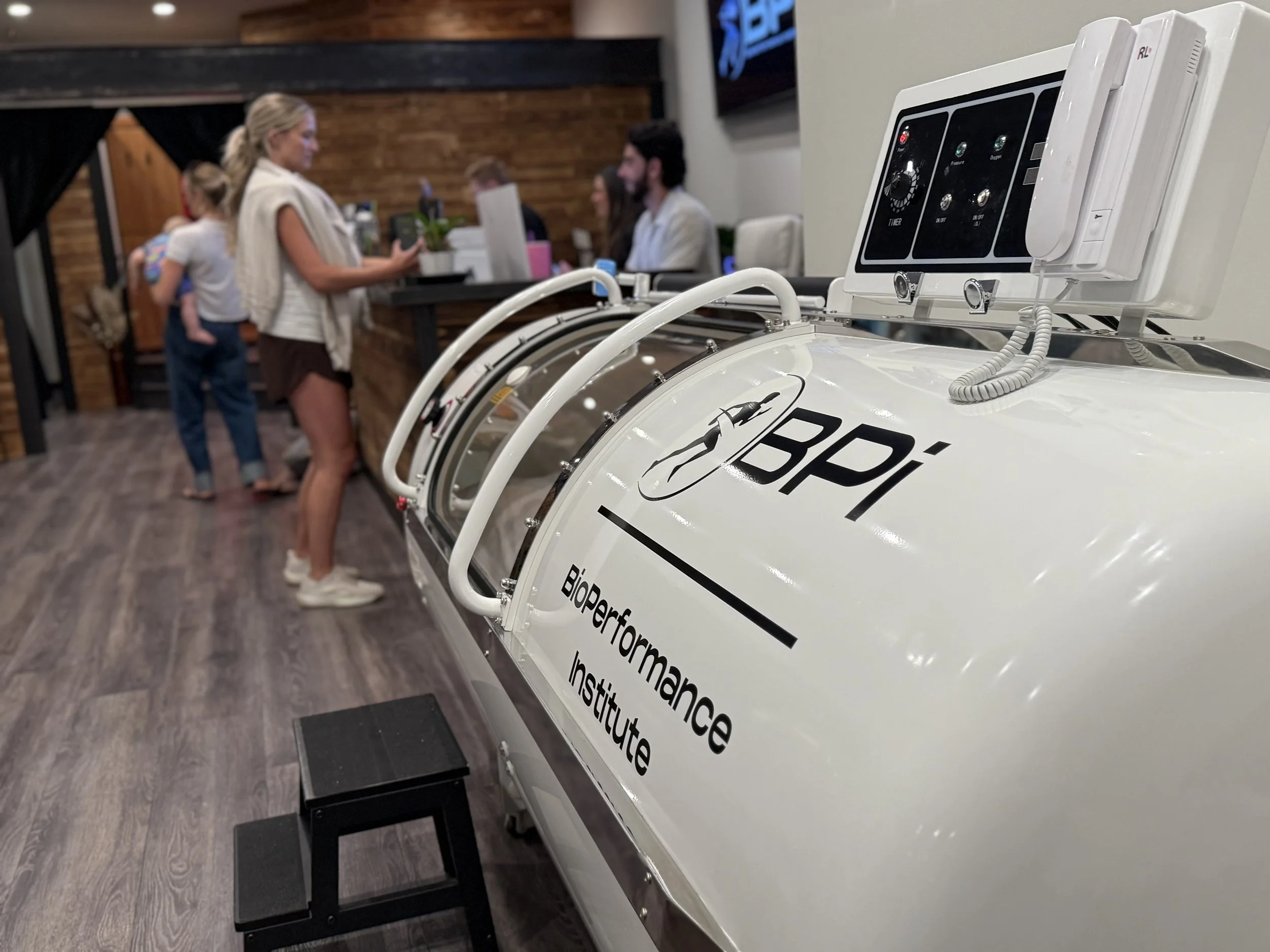
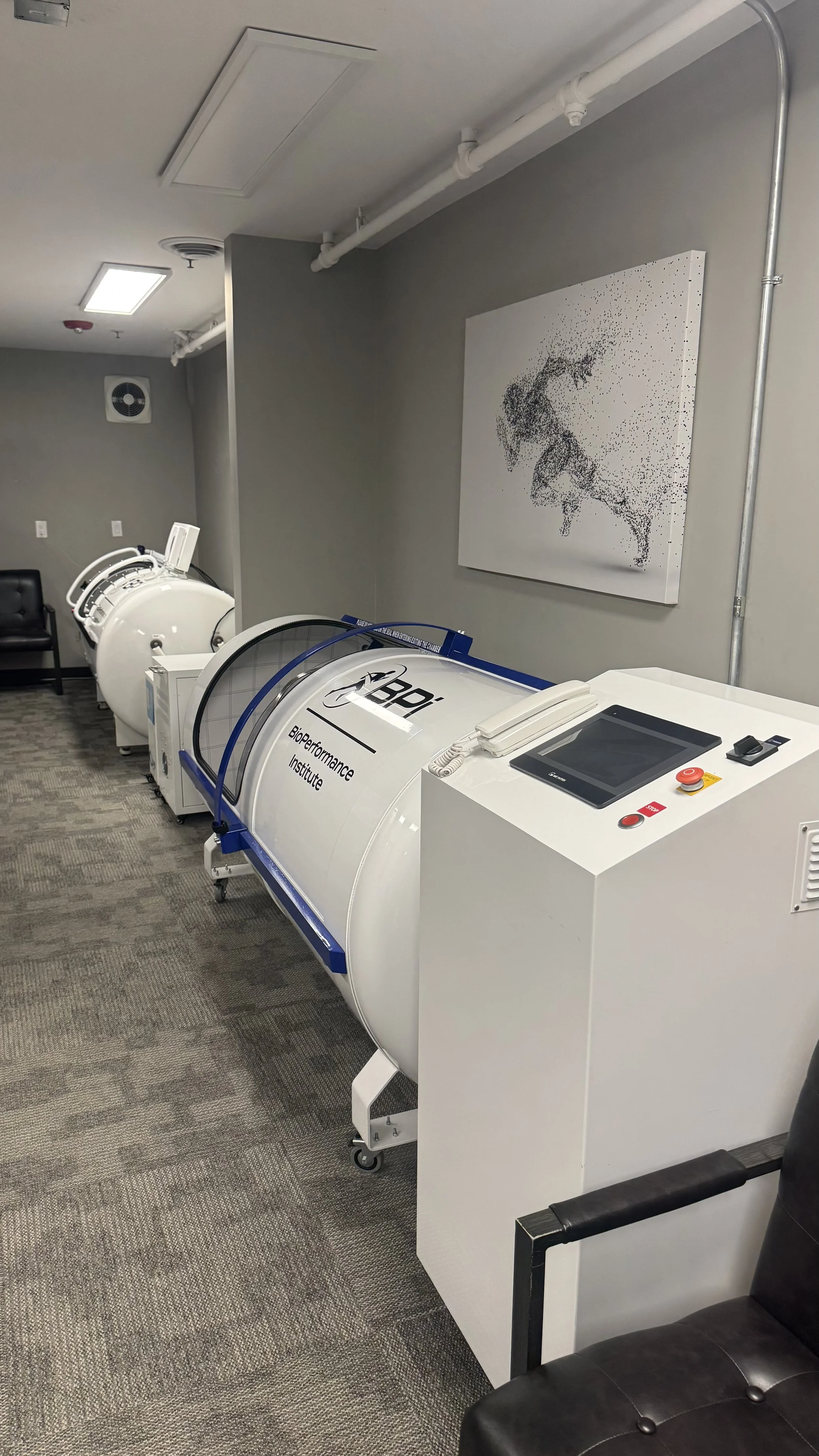
BPi uses a hard-shell chamber capable of maintaining controlled pressure throughout the session.
The chamber allows BPi to provide a consistent environment while concentrated oxygen is delivered through a nasal cannula.
-
BPi offers hyperbaric sessions using pressures ranging from 1.3 to 2.0 atmospheres absolute, commonly abbreviated as ATA.
The selected pressure and session structure depend on the client’s goals, health history, previous experience, and recommended protocol.
-
Inside the chamber, concentrated oxygen is delivered while pressure increases the amount of oxygen that can dissolve into the blood plasma.
This allows oxygen to circulate beyond what is possible under ordinary atmospheric conditions.
-
BPi does not assume that every client needs the same pressure, session length, or number of treatments.
The recovery team considers why you are pursuing HBOT and helps identify a practical starting point.
-
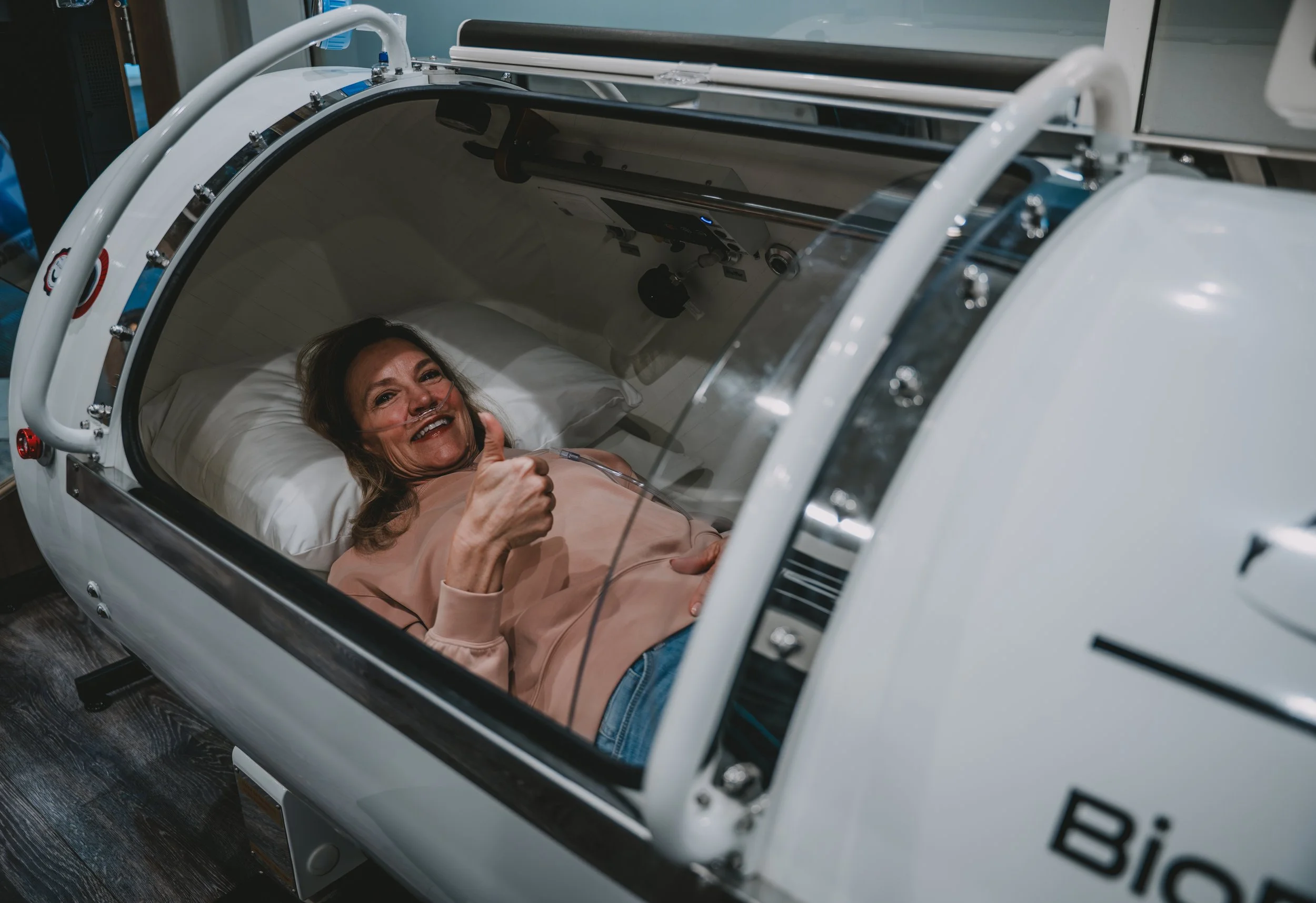
Most people find HBOT comfortable and relaxing. You will lie down inside the chamber while the pressure and temperature are adjusted for the session.
The chamber experience is passive, allowing you to rest while the system operates.
-
A BPi Recovery Specialist guides you through preparation, pressurization, treatment, and depressurization.
You can communicate with the specialist throughout the session and use the call-button system whenever you need assistance.
-
Some people begin HBOT to support a particular recovery period. Others incorporate it into an ongoing wellness, longevity, or performance routine.
Your plan can be adapted around your goals, schedule, health history, and response to treatment.
-
BPi can connect HBOT with physical therapy, occupational therapy, nutrition therapy, functional training, massage, and other recovery services when a broader approach would benefit the client.
Restore More Than Oxygen
Recovery depends on the environment you create for your body. Sleep, nutrition, movement, medical care, exercise, and oxygen availability can all influence how well the body responds to physical demands.
HBOT gives the body greater access to one of its most essential resources. At BPi, that technology is paired with professional guidance and a broader understanding of rehabilitation, wellness, and human performance.
What to Expect During Your First HBOT Session
1. Discuss Your Goals
Your Recovery Specialist will ask why you are interested in HBOT and what you hope to gain from the experience.
Goals may include surgery preparation, post-surgical recovery, injury support, physical performance, general wellness, longevity, or support for a specific health concern.
2. Review Your Health History
The team will review relevant medical conditions, medications, implanted devices, previous surgeries, ear or sinus concerns, lung history, and other factors that may affect the session.
Depending on your health history and intended use, additional medical clearance may be requested.
3. Prepare for the Chamber
Your Recovery Specialist will explain the session, communication system, pressure changes, oxygen delivery, and items that may be brought into the chamber.
Follow the facility’s clothing and personal-item instructions. Only bring electronics, batteries, skin products, reading materials, or other personal items that the team has approved for use with the chamber.
4. Enter the Chamber
You will lie comfortably inside the hard-shell chamber. The Recovery Specialist will confirm that you are ready before beginning pressurization.
You will remain able to communicate throughout the experience.
5. Equalize Your Ears
As pressure increases, your ears may feel similar to how they feel during airplane travel or a change in elevation.
Swallowing, yawning, or using another pressure-equalization technique can help your ears adjust. The Recovery Specialist can slow or pause the process if you need additional time.
6. Relax During the Session
Once the planned pressure is reached, you can rest while concentrated oxygen is delivered.
BPi sessions typically last between 30 and 60 minutes. Many clients use the time to relax, listen to approved media, read an approved book, or simply rest.
7. Communicate Whenever Needed
You will have access to a call button and can communicate with the Recovery Specialist if you have a question or need an adjustment.
The team remains available throughout the session to support your comfort and safety.
8. Depressurize Gradually
At the end of the session, pressure is gradually returned to normal. Your ears may again need to equalize as the chamber depressurizes.
The chamber will open once the process is complete.
9. Review the Experience
Your Recovery Specialist will ask how you feel and answer questions about your experience.
Some clients feel relaxed, refreshed, or mentally clear following a session, while others notice changes gradually over a series of treatments.
10. Build Your Next Step
The recommended frequency depends on why you are using HBOT. Some clients schedule individual recovery sessions, while others follow a more consistent series.
The BPi team can help you build a plan based on your goals, availability, and response.
Why Choose BPi for Hyperbaric Oxygen Therapy?
Advanced Recovery Technology
BPi provides access to a hard-shell hyperbaric chamber capable of operating across a range of pressure settings.
This gives the recovery team the ability to create a structured session around the client’s intended use.
A Human-Performance Approach
BPi views recovery as part of a larger performance continuum. The goal is not limited to reducing discomfort. It is to help people restore function, elevate physical capacity, and optimize how they feel and perform.
Individualized Guidance
Your health history, goals, and previous experience matter. BPi helps clients understand the process and choose a practical approach rather than treating every session exactly the same.
Support Throughout the Experience
The Recovery Specialist explains what is happening, helps you manage pressure changes, monitors the session, and remains available through the chamber’s communication system.
Rehabilitation and Recovery in One Network
BPi brings together physical therapy, occupational therapy, nutrition, functional training, massage, and recovery technology.
This allows clients to connect HBOT with other services when a coordinated approach supports the larger goal.
Options for Medical, Lifestyle, and Performance Goals
People come to BPi from different starting points. Some are rebuilding after surgery or injury. Others are pursuing athletic recovery, proactive health, or long-term physical resilience.
The recovery team helps connect the chamber experience with the outcome that matters to the individual.
Accessible North Idaho Location
HBOT is available in Post Falls for people throughout Kootenai County, Coeur d’Alene, Hayden, Rathdrum, Liberty Lake, Spokane Valley, and surrounding communities.
Introductory Pricing
New clients can experience their first hyperbaric session for $69.
A free 15-minute call is also available for people who want to ask questions before scheduling.
Scholarship Opportunities
BPi offers an HBOT scholarship application for people seeking additional access to the service.
Contact the team for current eligibility requirements, availability, and application information.

Physical Therapy locations

Hyperbaric Oxygen Therapy FAQs
-
Hyperbaric Oxygen Therapy involves breathing concentrated oxygen while resting in a chamber pressurized above normal atmospheric pressure.
The pressure allows more oxygen to dissolve into the blood plasma, increasing the amount of oxygen available for circulation throughout the body.
-
Healing tissue requires oxygen. Increasing oxygen availability can support cellular energy, collagen production, immune activity, circulation, new blood-vessel formation, and other processes involved in tissue repair.
The specific response depends on the condition, pressure, oxygen exposure, treatment schedule, and individual.
-
A hard-shell chamber has a rigid exterior designed to maintain controlled pressure.
BPi’s chamber uses increased atmospheric pressure while concentrated oxygen is delivered through a nasal cannula.
-
ATA stands for atmospheres absolute, a measurement of pressure.
Normal atmospheric pressure at sea level is approximately 1.0 ATA. BPi currently provides sessions between 1.3 and 2.0 ATA.
-
Breathing supplemental oxygen increases the amount of oxygen entering the lungs. Hyperbaric therapy combines concentrated oxygen with increased atmospheric pressure.
The added pressure allows more oxygen to dissolve into the liquid portion of the blood, creating a different physiological environment than oxygen delivered at normal atmospheric pressure.
-
People explore HBOT for several reasons, including:
Preparation for surgery
Post-surgical recovery
Wound and tissue healing
Bone-healing support
Inflammation support
Physical and athletic recovery
Neurological support
Autoimmune-related concerns
Cellular recovery
Longevity and healthy aging
General wellness and resilience
The evidence, protocol, and recommended medical coordination can differ significantly by application.
-
HBOT may help support tissue oxygenation before a planned procedure.
Some clients incorporate sessions into pre-surgical preparation with guidance from their surgeon or healthcare team.
-
Increased oxygen availability may support tissue repair, collagen production, circulation, swelling management, and wound healing after surgery.
The timing and frequency should account for the procedure, healing stage, surgeon’s instructions, and individual health history.
-
The brain and nervous system require substantial oxygen. Hyperbaric oxygen is being studied for its potential effects on neurological function, cellular repair, inflammation, and recovery.
People considering HBOT for a neurological condition should continue working with their physician and rehabilitation providers.
-
HBOT may be explored as a supportive service for people managing inflammatory or autoimmune concerns.
It does not replace medical diagnosis, medication, or specialist care. The BPi team may request medical guidance depending on the condition and health history.
-
Hyperbaric oxygen may support tissues affected by inflammation and reduced oxygen availability. It can influence circulation, oxygen delivery, immune activity, and biological pathways associated with the inflammatory response.
Individual results depend on the underlying cause and treatment plan.
-
HBOT supports oxygen delivery, circulation, and cellular energy production. These functions are involved in the body’s broader recovery and waste-management processes.
It should be considered one component of a comprehensive wellness plan rather than a replacement for medical treatment, nutrition, hydration, sleep, or healthy organ function.
-
HBOT has become an area of growing interest within longevity research.
Studies continue to explore how repeated hyperbaric exposure may influence cellular repair, mitochondrial function, blood-vessel development, inflammation, cognition, and other processes associated with aging.
-
Athletes use HBOT to support oxygen availability, tissue recovery, and the body’s response to demanding training.
It can complement physical therapy, strength training, mobility work, nutrition, hydration, sleep, and appropriate management of training loads.
-
HBOT has recognized uses within comprehensive care for selected chronic wounds and tissue injuries.
By increasing oxygen availability in affected tissue, it can support collagen production, new blood-vessel formation, immune activity, and healing. It does not replace appropriate wound care or medical treatment.
-
Most clients tolerate HBOT well and find the session relaxing.
The most noticeable sensation is usually pressure in the ears during pressurization and depressurization. This is similar to the sensation experienced during airplane travel.
-
HBOT is generally a comfortable and passive experience.
If you experience ear discomfort or another concern, communicate with your Recovery Specialist. The pressure can be adjusted or paused while you become more comfortable.
-
Depending on the chamber’s current safety policy, approved activities may include resting, reading, or using approved entertainment.
Confirm every personal item with the Recovery Specialist before entering the chamber.
-
BPi HBOT sessions typically last between 30 and 60 minutes.
Allow additional time for preparation, pressurization, depressurization, and a brief post-session conversation.
-
The ideal number depends on your goals, health history, treatment pressure, and response.
Some people use individual recovery sessions. Others complete a consistent series as part of a surgery, healing, wellness, longevity, or performance plan.
-
Experiences vary. Some clients describe feeling relaxed, refreshed, or mentally clear after a session. Other benefits may become more noticeable over time or through a consistent series.
Your Recovery Specialist will ask about your response and help you determine the next step.
-
HBOT is well tolerated by many appropriately screened clients.
Because pressure and concentrated oxygen affect the body differently than ordinary air, BPi reviews relevant health conditions, medications, implanted devices, lung history, and ear or sinus concerns before treatment.
-
Additional clearance may be appropriate for people with:
Lung disease or a history of a collapsed lung
Recent lung or ear surgery
Difficulty equalizing ear pressure
Active sinus or respiratory symptoms
Seizure history
Diabetes
Pregnancy
Implanted medical devices
Active cancer treatment
Recent surgery
Certain medications
Significant claustrophobia
Share your complete health history with the team before beginning.
-
A referral may not be necessary for every recovery or wellness session.
Medical clearance may be requested based on your condition, health history, medications, intended protocol, or reason for treatment.
-
Insurance coverage depends on the diagnosis, treatment protocol, medical necessity, provider requirements, facility requirements, and individual insurance plan.
Elective recovery, performance, longevity, and general wellness sessions may be self-pay. Contact BPi and your insurer for current information.
-
BPi currently offers the first HBOT session for $69.
Contact the recovery team for regular session rates, packages, current promotions, and scholarship information.