
Know Your Starting Point. Shape What Comes Next.
Physical Therapy Annual Examination
Locally Owned & Operated
Coeur d’Alene
A Checkup for How Your Body Moves and Performs
Routine health screenings help you monitor important aspects of your overall health. A Physical Therapy Annual Examination applies that same proactive mindset to movement and physical capacity.
During the examination, a physical therapist evaluates four cornerstone areas:
Strength
Flexibility and range of motion
Balance
Endurance
Standardized testing and movement-measurement technology provide objective information about what your body currently does well and where there may be opportunities to improve.
Your results create a baseline that can guide exercise, training, rehabilitation, healthy aging, and future testing. They can also make it easier to recognize changes that may be difficult to notice during everyday life.
A PT Annual Examination does not replace an annual medical examination with your primary-care provider. It provides a focused assessment of movement, physical function, and performance.
How a PT Annual Examination Can Help

-
The examination creates measurable starting points for strength, flexibility, balance, and endurance. These results can be used to understand your abilities today and evaluate changes during future examinations.
-
Testing can reveal areas where strength differs between sides of the body or where a particular joint or movement may have less capacity than expected. Your physical therapist will help explain what those findings mean for you.
-
Restricted or uneven movement can affect exercise, recreation, work, and everyday tasks. Three-dimensional movement testing helps measure how major joints move through specific activities.
-
Balance involves more than standing on one foot. Testing can provide information about stability, weight distribution, force control, and how your body responds during different movement tasks.
-
Endurance influences how well you tolerate sustained activity. Understanding your current capacity can help you make more informed decisions about exercise, recreation, and progressive training.
-
The examination can help establish a starting point before a new season, training program, outdoor activity, or performance goal. Results may highlight physical qualities worth developing before demands increase.
-
Strength, balance, mobility, and endurance all contribute to long-term independence. Periodic testing can help you monitor these abilities and address changes before they interfere with the activities that matter to you.
-
Repeating the examination gives you objective information to compare with your previous results. This can help show whether your exercise, rehabilitation, or training approach is producing measurable progress.
Highlights of the PT Annual Examination

-
The examination provides a broad view of physical performance by assessing strength, flexibility, balance, and endurance rather than focusing on only one body part or activity.
-
BPi uses VALD performance technology to collect measurable information. This helps supplement the physical therapist’s clinical observations with data that can be recorded and compared.
-
The examination is designed for a range of ages and physical abilities. Your physical therapist can select and modify testing tasks based on your health history, current abilities, and goals.
-
Testing systems provide information your physical therapist can review with you. The goal is to turn measurements into useful explanations rather than leaving you with numbers that lack context.
-
Your results are organized into a clear summary of your current physical abilities. The report highlights areas of strength, potential limitations, and opportunities for continued development.
-
Your physical therapist can use the findings to recommend an appropriate next step, which may include independent activity, targeted exercises, functional training, physical therapy, repeat testing, or follow-up with another healthcare professional.
-
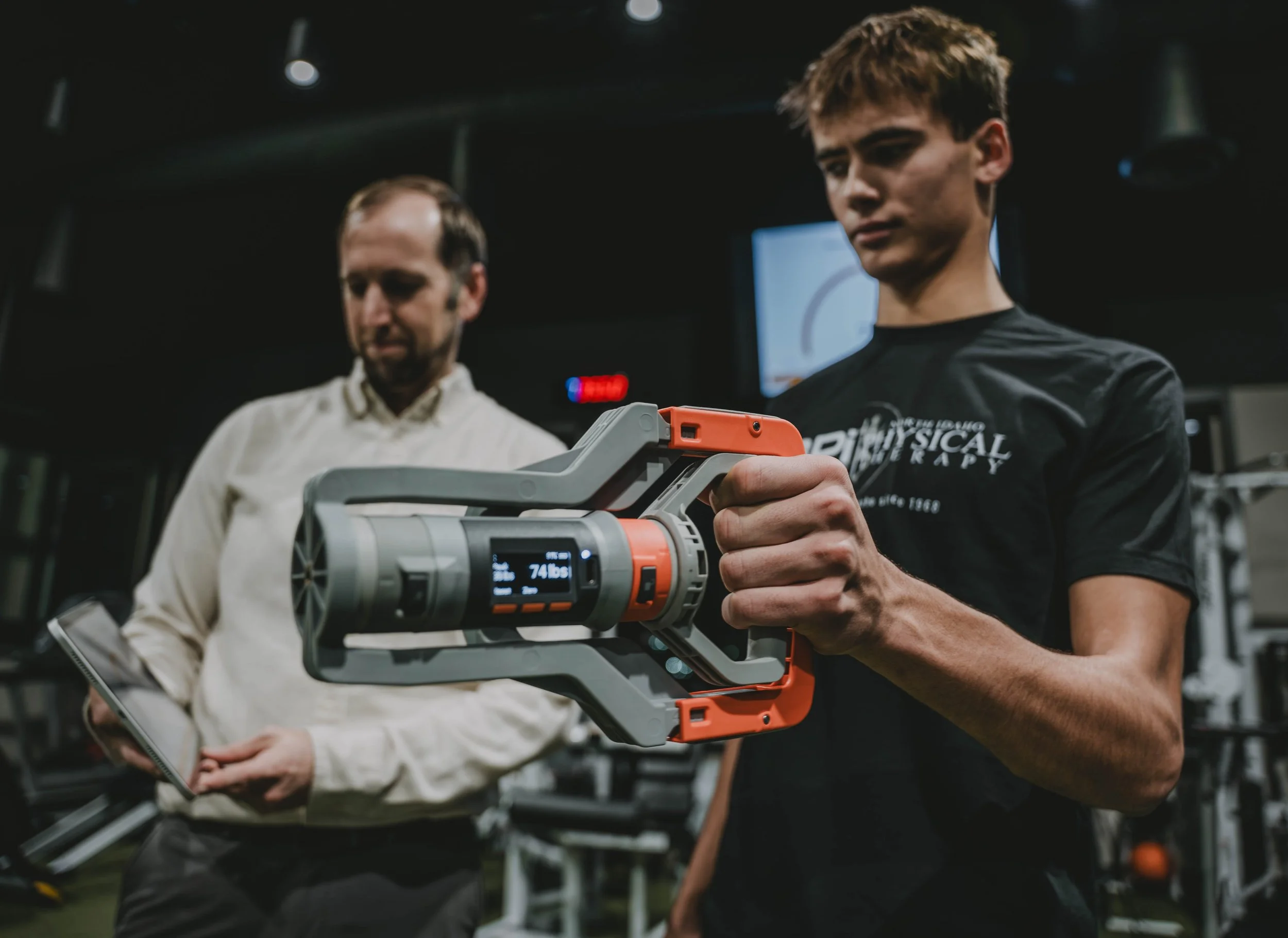
Dynamo measures strength across major joints and muscle groups. Results can help identify current capacity, side-to-side differences, and areas that may benefit from focused strengthening.
-
ForceDecks use force-plate technology to measure how your body produces and controls force. Depending on the testing selected, the system can evaluate qualities such as strength, power, balance, weight distribution, and movement strategy.
-
HumanTrak uses markerless three-dimensional movement analysis to measure motion across major joints. Results appear after each test and contribute to a detailed, shareable movement report.
Find Your Starting Point. Shape Your Future.
You do not have to wait for pain or an injury to learn more about your physical abilities.
A BPi Physical Therapy Annual Examination can help you understand how your body is performing now, identify what deserves attention, and make informed decisions about the way you move, exercise, work, and live.
What to Expect from Dry Needling
1. Discuss Your Health and Goals
Your physical therapist will ask about your health history, current activity level, previous injuries, daily responsibilities, and the physical goals that are important to you.
This conversation helps the therapist select testing activities that are relevant and appropriate for your abilities.
2. Establish Your Starting Point
Your therapist may observe how you complete basic movements before beginning the formal measurements. This provides context for the testing and allows tasks to be adjusted when needed.
3. Measure Strength
Dynamo testing may be used to measure strength across selected joints and muscle groups. Your therapist may compare different movements or sides of the body to better understand your current capacity.
4. Assess Flexibility and Movement
HumanTrak can measure range of motion and movement across major joints. You will be guided through specific movements while the system records objective information about how your body moves.
5. Evaluate Balance and Force Control
ForceDecks may be used for balance, strength, power, or movement testing. The activities selected can range from controlled standing and sit-to-stand movements to more demanding tasks when appropriate.
6. Measure Endurance
Your therapist will use an appropriate testing method to evaluate your ability to sustain physical activity. The difficulty will be selected according to your health, starting point, and goals.
7. Review Your Results
Your physical therapist will explain what the measurements show, including areas where you are performing well and areas that may deserve additional attention.
You will receive a report summarizing your results in a format that can support future planning and comparison.
8. Discuss Your Next Steps
Recommendations will depend on your findings and goals. You may be able to continue independently, begin a focused exercise plan, work with a trainer, address a specific limitation through physical therapy, or repeat the examination later to measure progress.
Testing should feel appropriately challenging without being unsafe. Tell your physical therapist about pain, dizziness, fatigue, recent procedures, health concerns, or other symptoms before or during the examination.
Why Choose BPi for Your PT Annual Examination?
Physical Therapist–Led Testing
A physical therapist understands how strength, mobility, balance, endurance, health history, and activity demands interact. Your results are interpreted within that broader clinical context.
Technology Supported by Clinical Judgment
Measurement technology provides useful data, but numbers do not tell the entire story. BPi combines objective testing with professional observation, conversation, and individualized interpretation.
More Than a Pass-or-Fail Test
The examination is not about earning a perfect score. It is designed to clarify your current abilities and help you decide what to maintain, improve, or monitor.
Appropriate for Different Starting Points
The service is designed for people across a broad range of ages and abilities—from active adults and athletes to people focused on mobility, healthy aging, and independence.
Clear, Actionable Information
Your therapist will help connect your results to real goals. That may mean lifting confidently, keeping up with family, returning to recreation, preparing for a demanding season, or maintaining the capacity to live independently.
Measurable Long-Term Progress
Because the examination establishes recorded measurements, future testing can provide a clearer picture of how your physical abilities have changed over time.
Connected Health and Performance Services
If your results indicate that you could benefit from additional support, BPi can help connect you with physical therapy, functional training, recovery, nutrition, and other relevant services across the organization.


Physical Therapy locations

PT Annual Examination FAQs
-
A PT Annual Examination is a comprehensive assessment of strength, flexibility, balance, and endurance. It provides objective information about your current physical abilities and establishes a baseline that can be compared with future results.
-
An annual medical examination may address general health, medications, laboratory testing, health screenings, and medical risk factors. A PT Annual Examination focuses specifically on movement, strength, balance, flexibility, endurance, and physical function.
The PT Annual Examination complements routine medical care but does not replace an examination with your primary-care provider.
-
No. The examination is designed for people who want a proactive understanding of their physical abilities. You may benefit even if you are active, independent, and not currently experiencing symptoms.
-
The service may be useful for active adults, recreational athletes, people beginning a new exercise program, older adults focused on long-term independence, and anyone who wants measurable information about their movement and physical capacity.
-
The four cornerstone categories are strength, flexibility and range of motion, balance, and endurance. The specific tests used within those categories will depend on your abilities, health history, and goals.
-
VALD produces measurement technology used in rehabilitation and human performance settings. BPi uses Dynamo for strength testing, ForceDecks for force and balance-related measurements, and HumanTrak for three-dimensional movement analysis.
-
Some activities may be challenging because the goal is to understand your current capacity. Your physical therapist will select appropriate tests, explain each activity, and adjust or stop testing if needed.
-
Wear comfortable clothing that allows you to move freely. Athletic shoes are generally appropriate for balance, endurance, and other standing activities. Contact the clinic if you have questions about clothing or footwear for your examination.
-
Appointment length can depend on the testing selected and the time needed to review your results. Contact the Coeur d’Alene clinic for the current appointment duration and scheduling details.
-
Completing the examination annually can provide a useful year-to-year comparison. Your therapist may recommend a different follow-up interval based on your goals, training schedule, rehabilitation needs, or health history.
-
Your physical therapist will explain the finding and discuss whether it appears relevant to your goals. Recommendations may include independent exercises, functional training, physical therapy, repeat testing, or consultation with another healthcare professional.
-
The examination evaluates physical performance and movement-related abilities. It is not a replacement for a medical diagnostic examination. If your therapist observes something that warrants medical attention, you may be advised to follow up with an appropriate healthcare provider.
-
The examination may be covered through physical therapy benefits. Coverage, deductibles, copays, referral rules, and authorization requirements vary by insurance plan. Contact your insurer or the BPi Coeur d’Alene clinic to confirm benefits before your appointment.
-
Referral requirements can depend on your insurance plan and individual circumstances. Contact the clinic before scheduling so the team can confirm what may be required.
-
The examination is designed to produce a clear, shareable report. Ask the BPi team how to obtain or share your results with a healthcare provider, trainer, coach, or other professional involved in your care.